
The Responsible AI for Learning (TRAIL) Lab, led by Shamya Karumbaiah, Assistant Professor in the Department of Educational Psychology at UW-Madison, conducts interdisciplinary research at the intersection of learning sciences, learning analytics, artificial intelligence, and human-centered design. The lab focuses on developing a scientific understanding of how AI can be used responsibly to support teaching and learning in real-world contexts. Their work emphasizes equity, ethics, and context-aware design, particularly in diverse and multilingual educational settings.
Partnership between the MLRC and the TRAIL Lab began in early 2025 through various shared research studies focused on the intersection of AI and multilingual learning. Through these collaborative studies, we sought to understand how science teachers engage with multilingual learners’ ideas when these ideas are expressed multilingually. We also wanted to learn about how AI can support this engagement to bridge the gap when teachers and their multilingual students do not share the same linguistic background. In the US, many of these students live in rural areas, where finding bilingual educators is challenging.
Therefore, the research team worked together to design and develop a tool to address this challenge. Researchers across the MLRC and the TRAIL Lab have worked together since to test the tool, understand the linguistic underpinnings of translanguaging in order to train LLMs to be able to better analyze and interpret it, and to look for funding opportunities to move the work forward. Through all these activities, both teams have worked alongside researchers in other disciplines, and community partners and schools.
This collaboration also aims to build sustained partnerships with members of the MLRC School Network to co-design AI tools that safely and effectively support translanguaging practices in classrooms. A key goal of the partnership is to ensure that AI technologies are responsive to the cultural, linguistic, and pedagogical realities of international schools. The International School Teacher Survey Study, the first project undertaken through this partnership, was a comprehensive survey exploring international school teachers’ perceptions of translanguaging, multilingualism, and AI. The findings were presented at the ICCE conference by Alina Guha, a doctoral student in the TRAIL Lab, and was co-authored by Gyeongri Kim, Shamya Karumbaiah, Esther Bettney Heidt (MLRC School Network Researcher), and Mariana Castro (MLRC School Network Co-Director). They found that international school teachers’ beliefs about translanguaging strongly correlated with their classroom practices, suggesting that many educators were integrating multilingual approaches. In contrast, a parallel study with U.S.-based teachers found no significant correlation between beliefs and practices.
The authors suggest that the structural and cultural contexts of international schools may better support organic translanguaging. While teachers in international settings viewed AI as a promising tool to support translanguaging, their attitudes toward AI did not yet translate into classroom use. This gap highlights important challenges in adoption and tool design. Additionally, teachers’ nuanced perspectives on decoloniality and AI underscored the need for context-sensitive approaches when designing technologies for equitable, multilingual education.
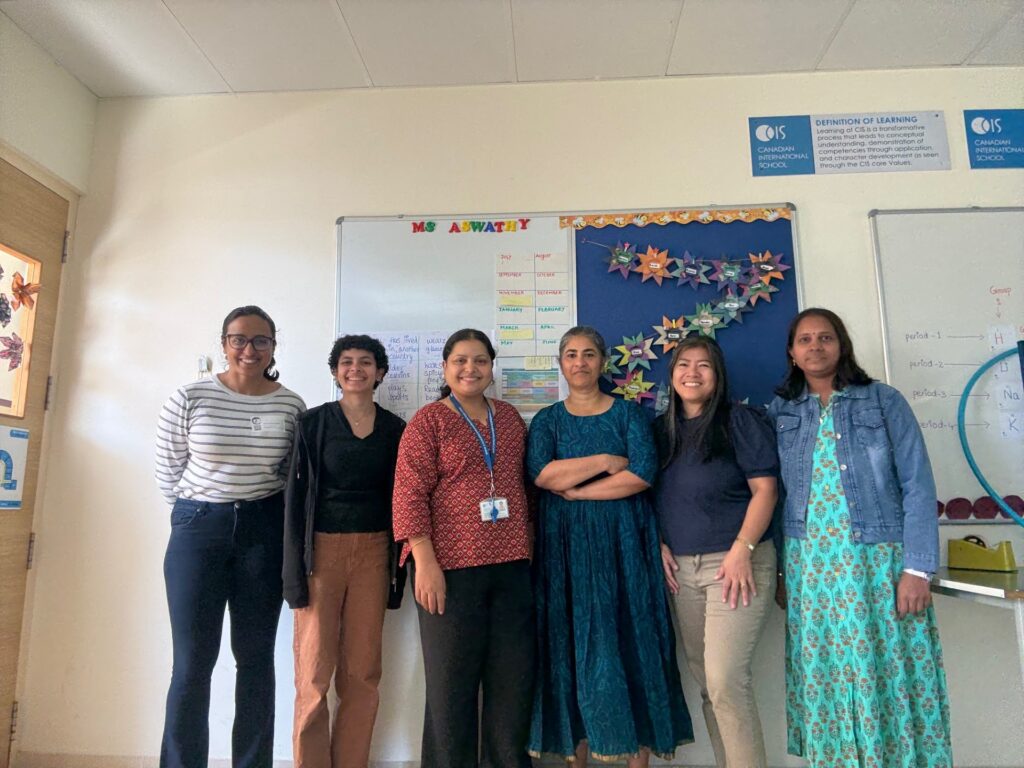
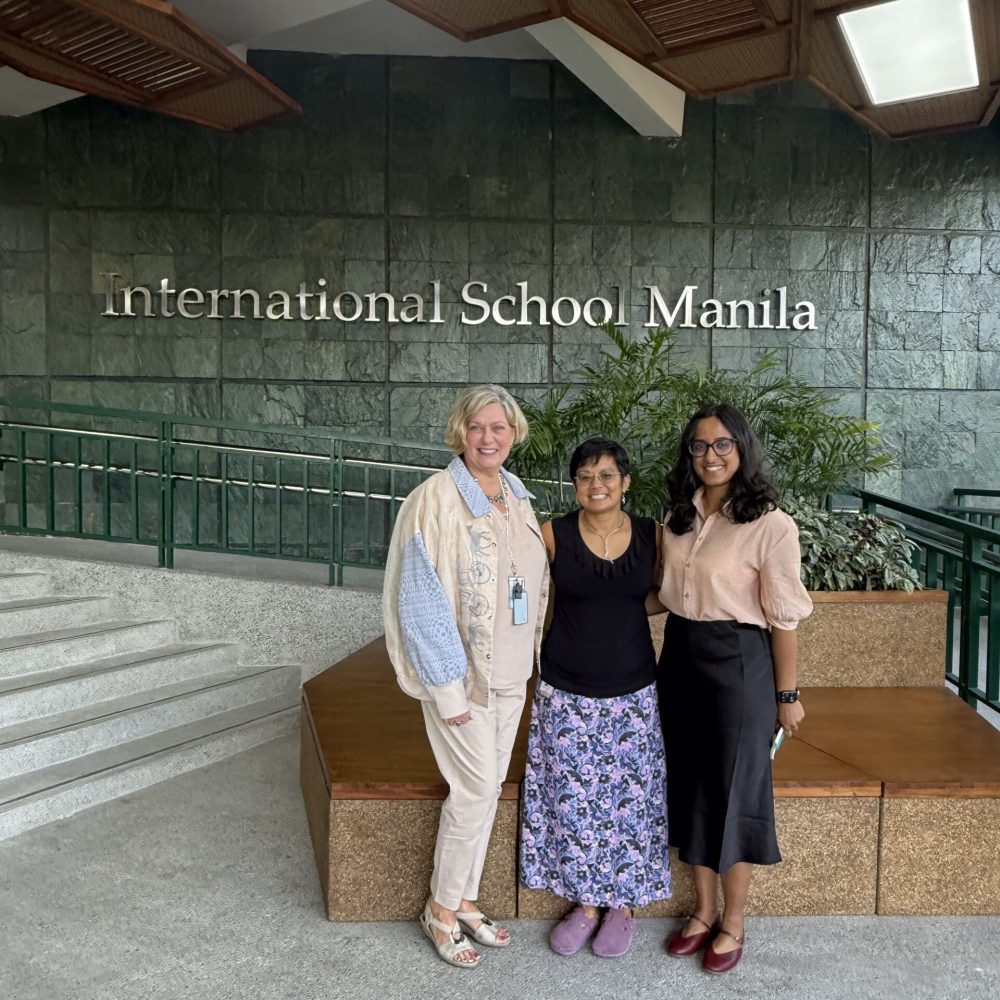
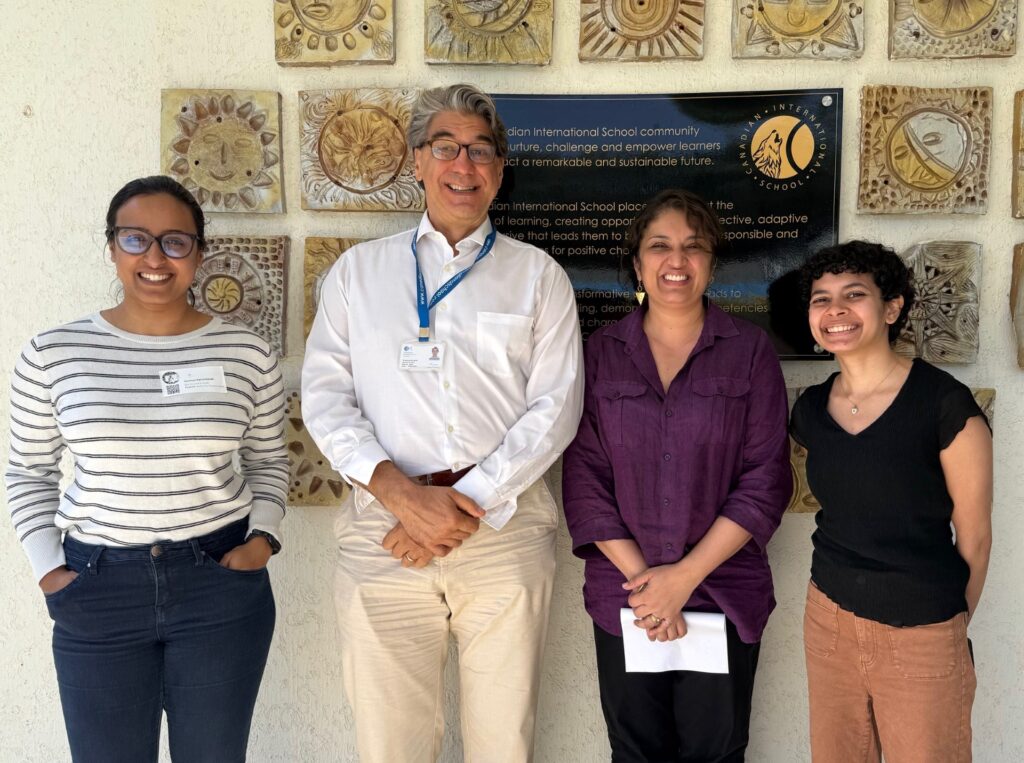
As part of ongoing research, Shamya Karumbaiah and UW–Madison graduate student, Alina Guha, visited MLRC School Network member schools (Canadian International School Bangalore, American International School Chennai, American School of Bombay, and International School Manila) in India and the Philippines. During these visits, they piloted SLAI (Science and Language with AI), a tool under development at the TRAIL Lab designed to support multilingual small-group discussions. These visits provided valuable insights into teachers’ needs and classroom practices in international school settings. Importantly, they allowed researchers to incorporate diverse perspectives into the early stages of technology design, ensuring that tools like SLAI are co-developed with educators and grounded in real-world use.