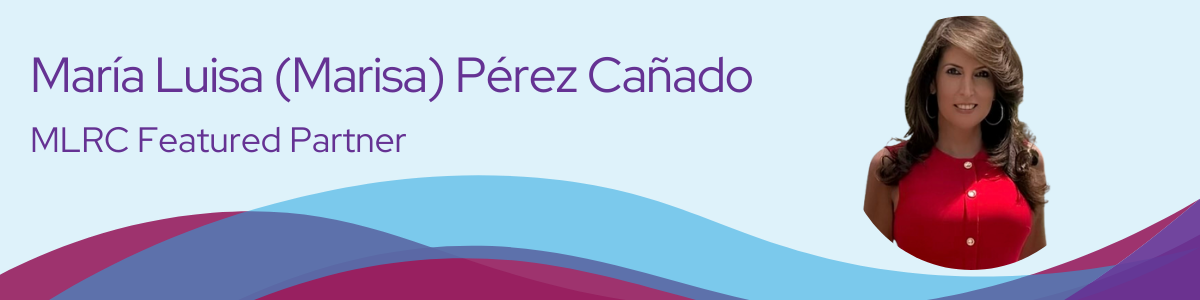
Dr. María Luisa (Marisa) Pérez Cañado is a Full Professor at the Department of English Philology of the University of Jaén, Spain, where she is also Work Package leader for plurilingual and intercultural education within the European University Alliance NEOLAiA.
She is the Principal Investigator of the Research Group HUM1040 and her research interests are in applied linguistics, bilingual education, and new technologies in language teaching. She is also a co-founder of ICEBERG, the International and Comparative Bi-/Multilingual Education Research Group. Their mission and vision is unifying international movement and community of mindful, open-minded, engaged, and collaborative scholar-practitioners dedicated to forging a new transnational path for bi-/multilingual education research, practice, professional development, and advocacy. Her work has appeared in 130 scholarly journals and edited volumes published by Elsevier, Peter Lang, Cambridge University Press, Multilingual Matters, Wiley-Blackwell, Routledge, DeGruyter, and Springer, among others.
She is also the author or editor of 11 books on the interface of second language acquisition and second language teaching, and editor/member of the editorial board of 24 international journals. Marisa has given over 200 lectures and talks in Belgium, Poland, Germany, Portugal, Ireland, England, Mexico, Brazil, Peru, United States, China, Hong Kong, Philippines, Japan, Australia, and all over Spain. She is currently coordinating the first intercollegiate MA degree on bilingual education and Content and Language Integrated Learning (CLIL) in Spain and has been a Principal Investigator of 16 European, national, and regional projects on language teaching methodologies and CLIL.
She has also been granted the Ben Massey Award for the quality of her scholarly contributions regarding issues that make a difference in higher education and four awards for pedagogical innovation and best teaching practices (2010, 2020, 2022–2023). She has equally been a finalist in the Premios Educa Abanca a Mejor Docente de España and is included in the Top 2% of the world’s most cited scientists according to the Ranking of World Scientists drawn up by Stanford University (2021–2025).
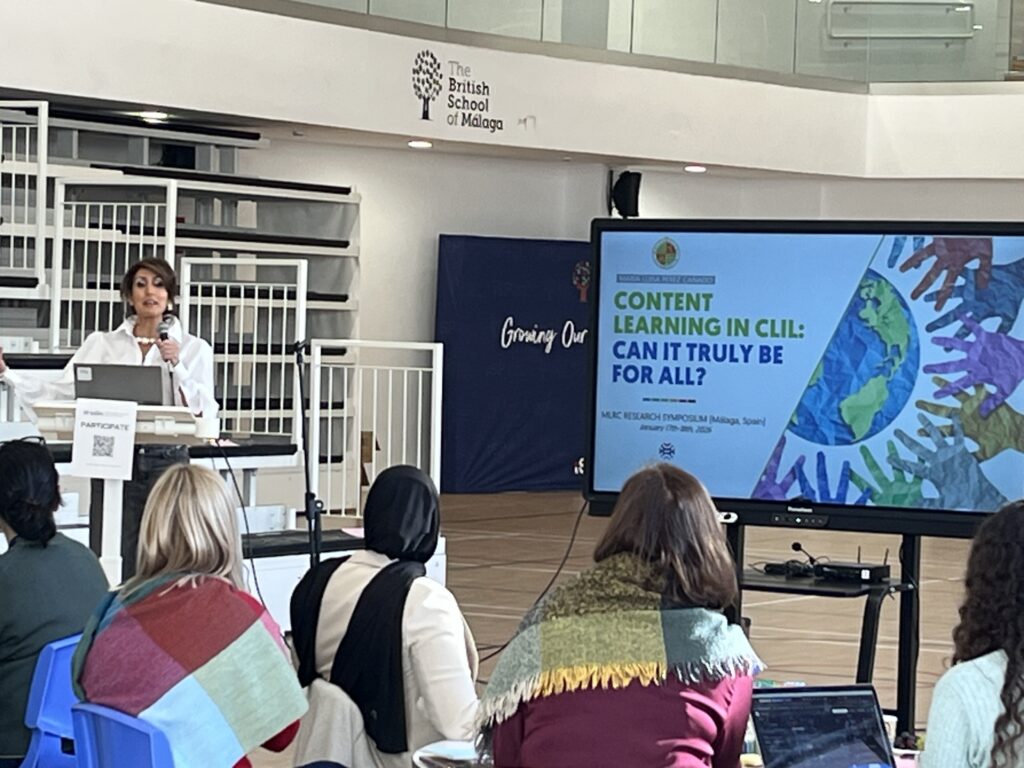
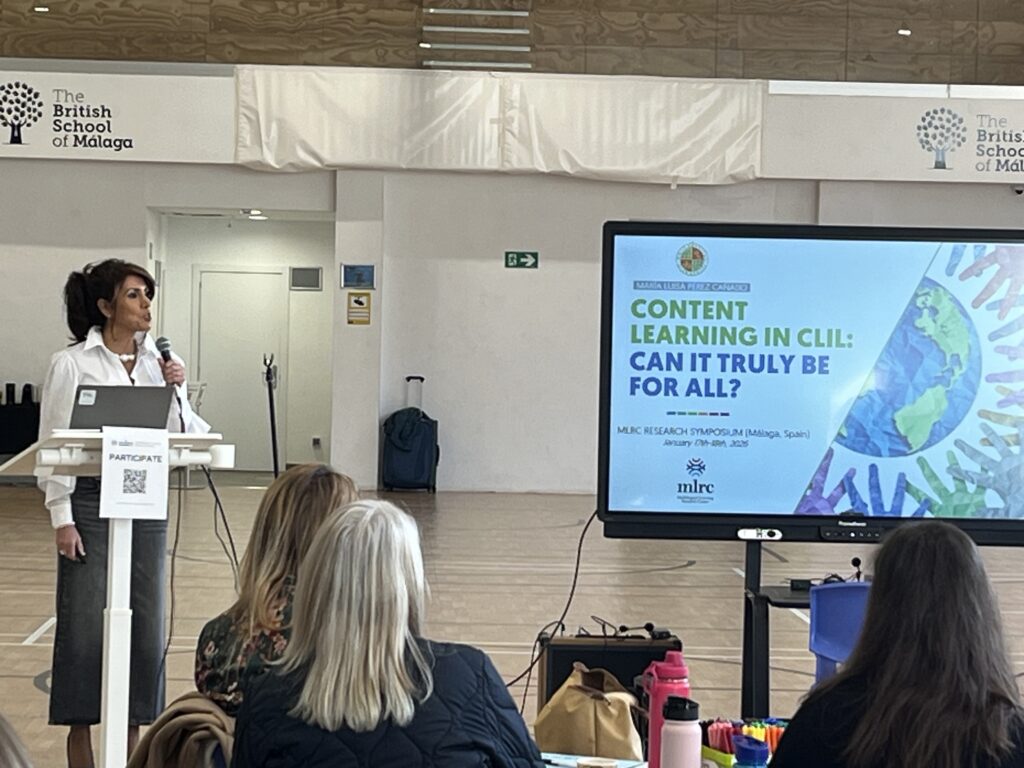
Marisa’s talk at the MLRC Symposium in Málaga offered a sneak peek into one of her most recent publications, which is still in press and which focuses on whether content taught through an additional language in CLIL can truly be mastered by all types of achievers. The study centered on two underexplored areas in CLIL research in conjunction: the effects of CLIL on content learning and attention to diversity in bilingual education. The study is innovative in its research design, as it is an instance of quantitative, statistical, quasi-experimental research, and since it is the first study in the field to focus exclusively on CLIL learners, categorizing them into three tiers of achievement in order to determine whether bilingual education can truly work for all. Through its large sample (nearly 1,500 students across 11 monolingual provinces in Spain), the study factored in 10 different intervening variables to gauge their possible modulating effect and used a generalized linear model to determine which variables were truly responsible for the possible differences in levels of competence. Marisa was joined by three of her graduate students, María Fátima Diago Ortega, José Antonio Morales Zurita, and Pablo Ramón Ramos, who engaged with participants and contributed their pedagogical and research expertise throughout the weekend.