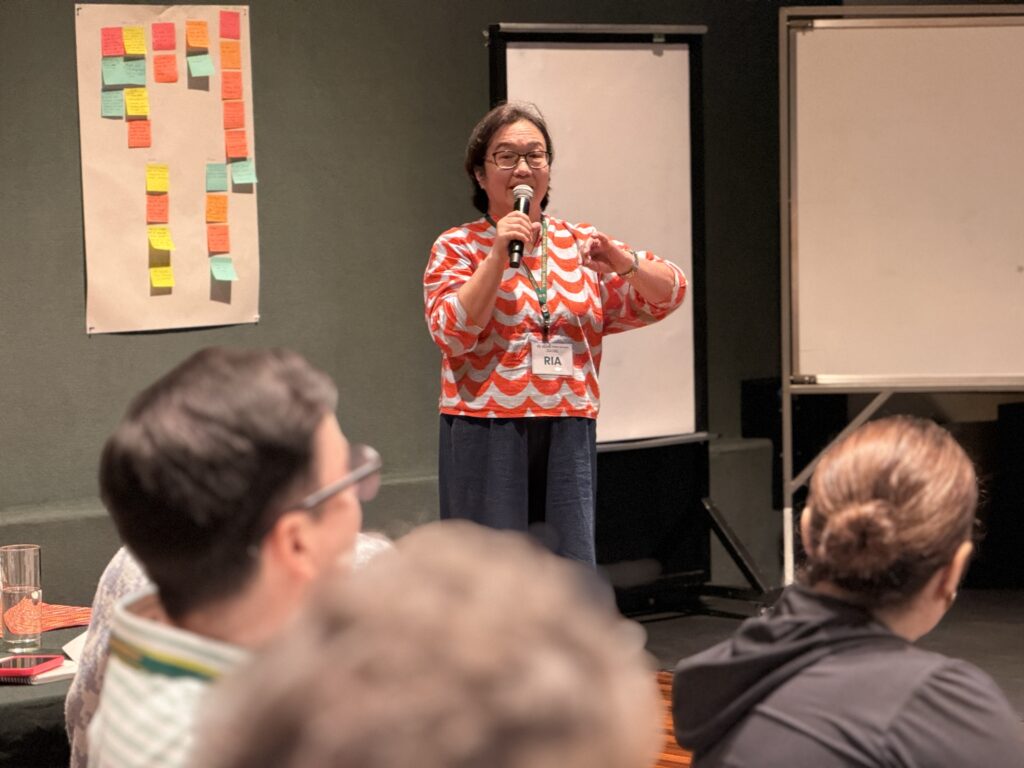
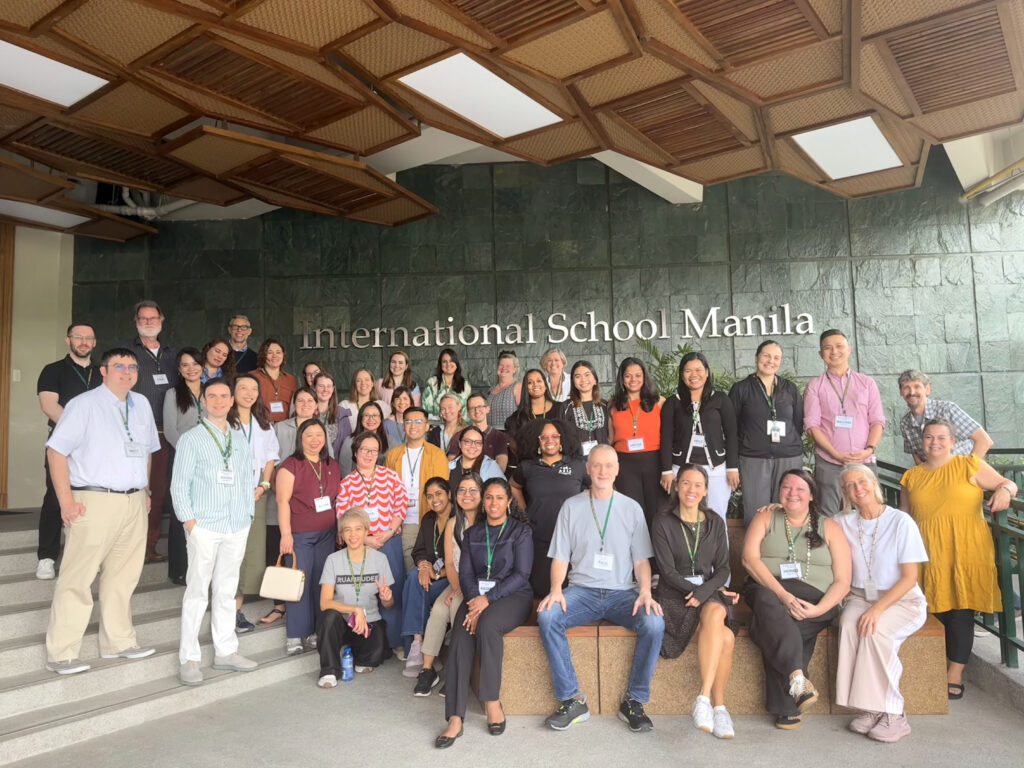
In January, participants at the MLRC Research Symposium in Manila had the opportunity to learn from Glocal Scholar Maria Rosario Yumul-Florendo, an Assistant Professor at the Department of Language, Literature, and the Arts at the University of the Philippines Baguio.
The MLRC School Network Glocal Scholar series is part of our commitment to integrate local and global contexts and to explore a range of issues related to the education of multilingual learners. As defined in “Gloocal Network Shifts: Exploring Language Policies and Practices in International Schools”, the term glocal reflects our goal to problematize the boundaries that often exist between conceptions of “global” and “local”, including the separation sometimes observed between international schools and their local context.
Dr. Yumul-Florendo’s explores linguistic landscapes (LL), the visual representation of languages in public spaces, which has emerged as a dynamic field within sociolinguistics and applied linguistics. Traditional definitions of LL focus on the language found on public road signs, billboards, street names, and commercial signage within a specific territory. However, recent scholarship has expanded this scope to include diverse “scapes” such as digital worlds, soundscapes, and even the natural world. Beyond merely providing information, these signs serve as a symbolic function, reflecting the cultural priorities, power dynamics, and linguistic hierarchies of a community.
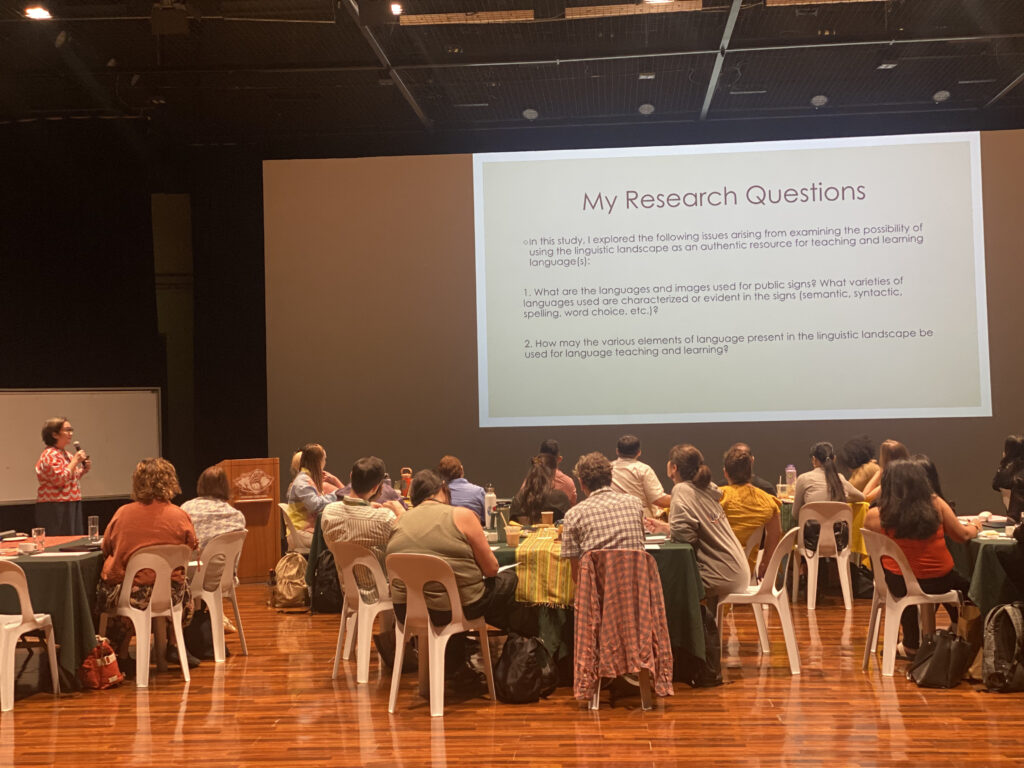
In her current work, she argues that the linguistic landscape offers a “treasure trove” of authentic texts that can significantly enhance language teaching and learning. By focusing on Baguio City, a multicultural and multilingual hub in the Philippines, she examines how the city’s central business district serves as a vibrant “cityscape” where language is seen and negotiated.
Furthermore, the work highlights how translanguaging, the seamless use of a speaker’s full linguistic repertoire, is the norm in multilingual communities.
By integrating LL into the classroom through frameworks like the LLinL2TL model, educators can bridge the gap between formal instruction and the real-world language learners encounter daily. She posits that engaging with these authentic materials fosters higher-order thinking skills, critical literacy, and a deeper appreciation for the cultural nuances embedded in the environment.
She holds a Ph.D. in Applied Linguistics from Lancaster University and her research interests include language variety, language teaching, and linguistic landscapes, with recent Scopus-indexed publications addressing the pragmatics of space and bilingual education.
Dr. Yumul-Florendo reflected on the MLRC Research Symposium. “The Glocal scholar experience at the MLRC Manila leg was both enriching and engaging. Aside from the opportunity to share my research with fellow teachers, I also had the chance to learn from the participants’ diverse perspectives and experiences. Coming from a completely different perspective, the Q&A portion was particularly enlightening, as it allowed me to see my research in a new light and consider angles I hadn’t previously considered. Overall, the MLRC Research Symposium was a valuable experience that broadened my understanding of educational research and teaching practices. It was a truly collaborative and inspiring environment that fostered growth and learning for all participants.”