The Western Association of Schools and Colleges (WASC) Accrediting Commission for Schools, is partnering with the Multilingual Learning Research Center (MLRC) at the University of Wisconsin–Madison to strengthen multilingual practices in schools across the globe.
While many educators associate multilingualism only with bilingual or dual-language programs, the WASC-MLRC partnership includes support for students across all international schools
Multilingualism: Not Just for Bilingual Schools
As one of the main international accreditation agencies, WASC serves international schools in a variety of ways. WASC’s accreditation framework supports all schools—whether or not they offer formal multilingual programs. Through self-study and peer review, WASC encourages schools to:
- Recognize the linguistic diversity already present in their student body
- Implement multilingual-friendly policies, practices, and instructional strategies
- Create inclusive environments where every student’s language background is viewed as an asset
This work is especially important given the demographic shifts many WASC-accredited schools are experiencing. Changing student populations, often including an increasing number of students from the local community, mean schools must be equipped to meet a wider range of language and learning needs. That’s where the partnership between WASC and MLRC comes in.
Why This Alignment Matters
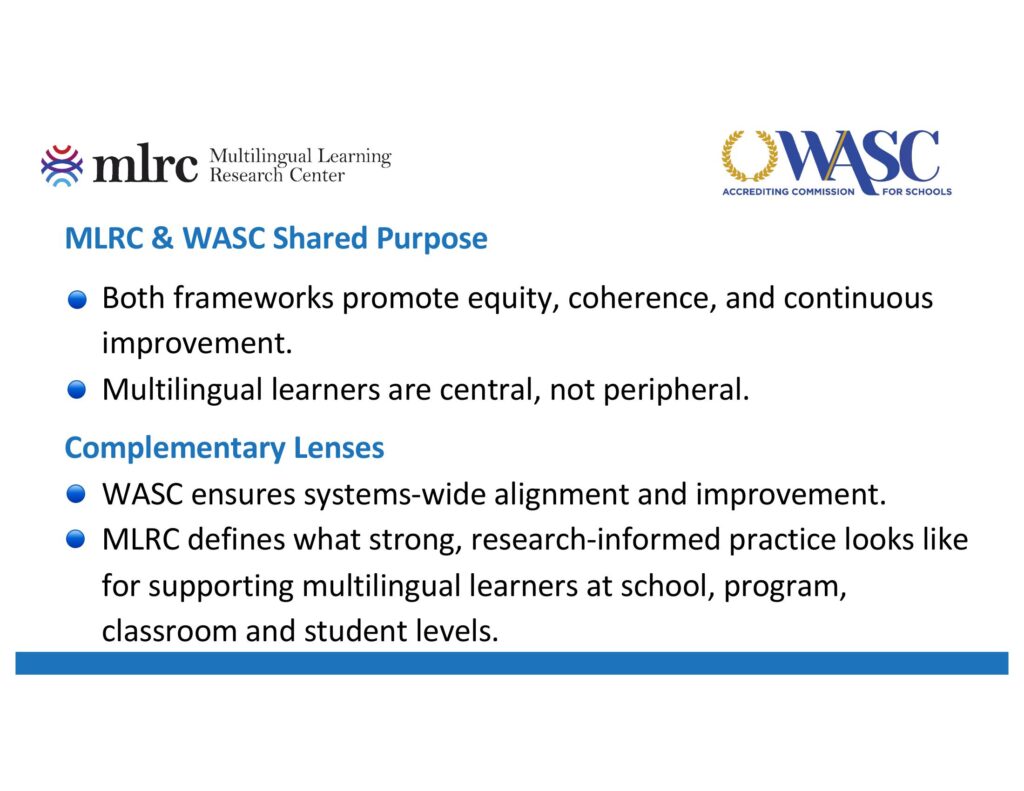
Shared beliefs, aligned missions and collaborative activities between WASC and the MLRC:
- Elevate practical strategies that schools—bilingual or not—can use to support students from multilingual backgrounds
- Promote asset-based mindsets around language learning and identity
- Helps schools better reflect on how their programs and systems serve all students
Whether a school offers full dual-language immersion or is just beginning to implement culturally and linguistically sustaining practices, WASC and MLRC are working together to ensure that language is never a barrier—and always a bridge.
Globally, WASC accredits nearly 600 international schools, 8 of which are members of the MLRC School Network.
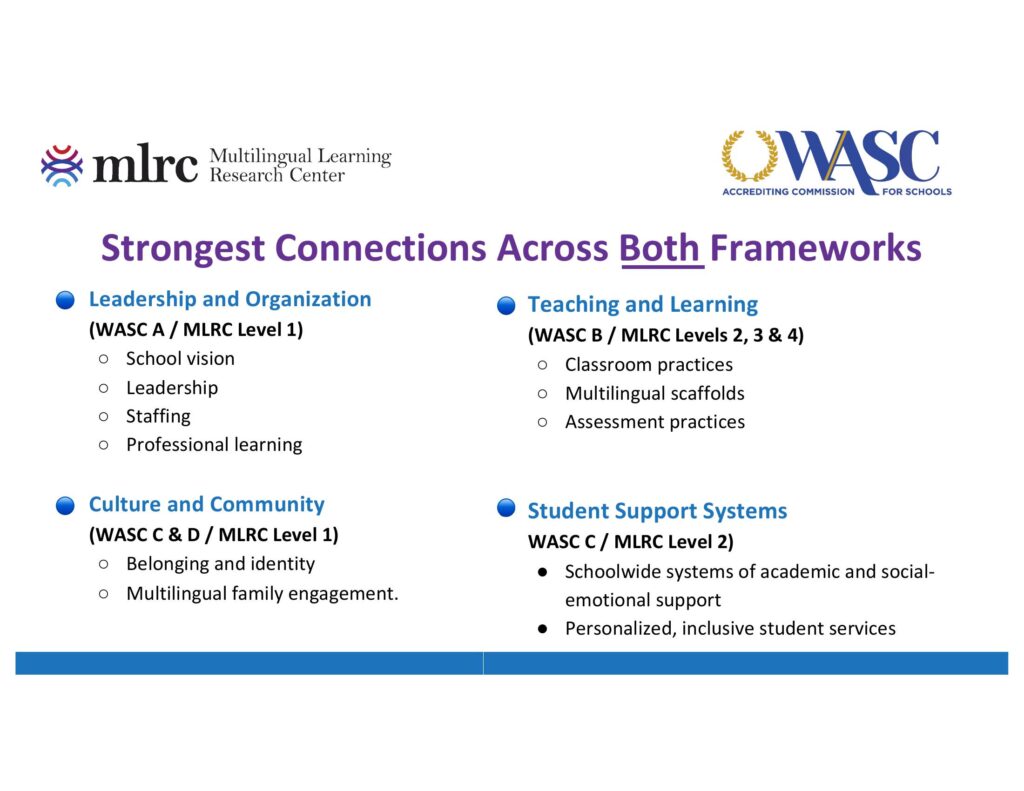
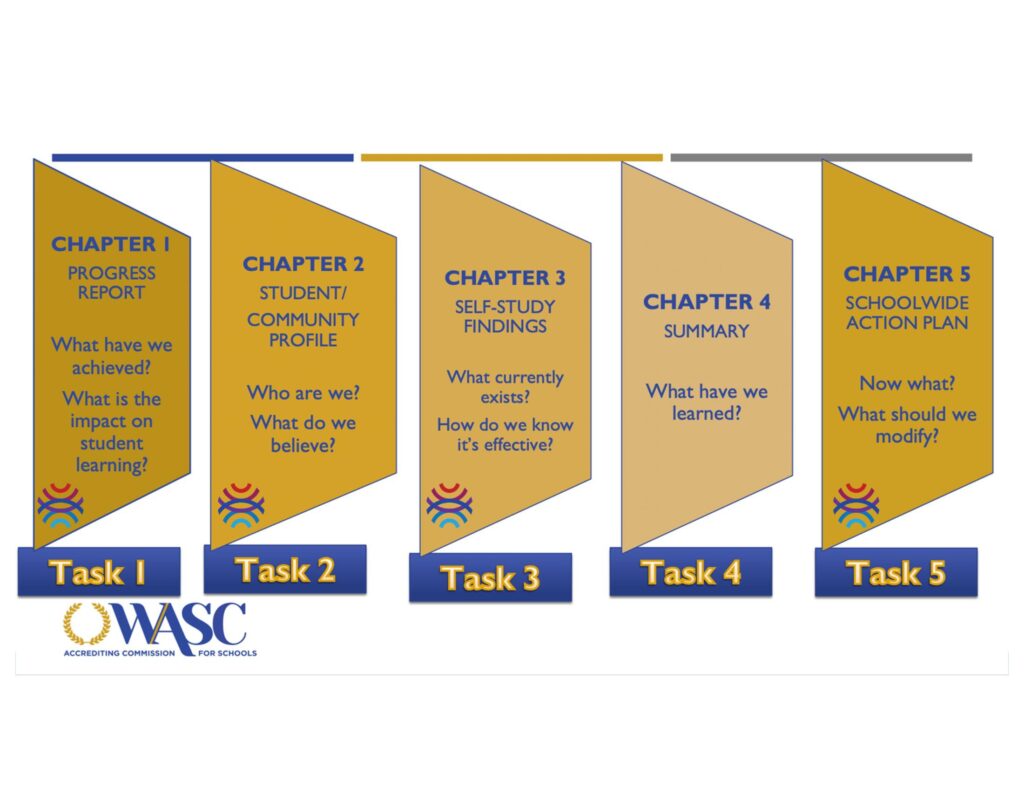
At several points throughout the WASC accreditation process, working with the MLRC for school improvement or action research helps international schools gain a deeper understanding of their local context, identify problems of practice and implement innovative solutions for sustainable change.
Both WASC and the MLRC believe that multilingualism empowers students to connect across cultures, think critically in diverse contexts, and thrive in an increasingly interconnected world. Language is a gateway to understanding, empathy, and global citizenship.
Schools that value and support multilingualism foster inclusive environments where students’ identities and heritage languages are honored, while also preparing them to navigate academic and professional settings with confidence. Embracing multilingualism aligns with the WASC commitment to equity, student-centered learning, and continuous improvement across diverse educational communities.
Learn more about WASC’s approach to multilingualism: www.acswasc.org/about/multilingualism