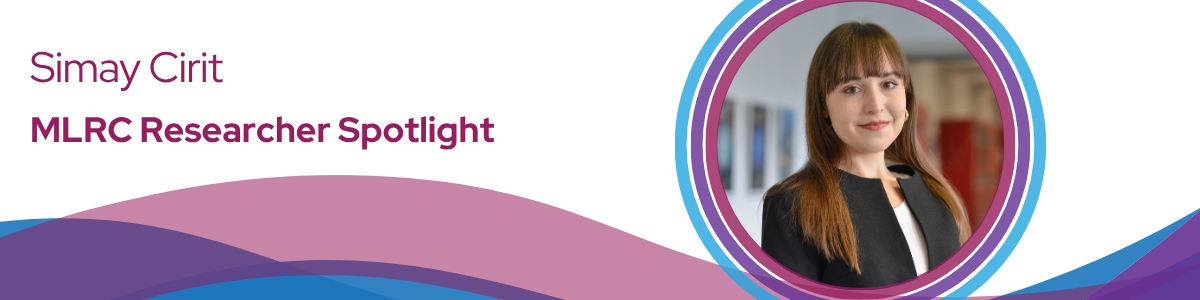
How can subtle interactional choices in the classroom dramatically expand participation and bridge content learning in subjects like mathematics for multilingual students? Former IB international primary teacher Dr. Simay Cirit brings a grounded, real-world perspective to second language learning and teaching in linguistically diverse classrooms. Her research addresses the non-trivial choices educators make every day.
By investigating the impact of how a teacher frames a question or how they close a dialogue, Simay helps educators understand how to foster equitable dialogic spaces without needing to master every language spoken in the room. Her research highlights how small, reflective shifts in daily classroom talk can lead to profound impacts on student engagement. She will be joining the NEASC/MLRC Research Symposium in Louisenlund, Germany, as a glocal scholar to share practical insights on harnessing classroom talk to empower every learner.
What experiences or questions first drew you to this area of research?
Before moving into academia, I worked as an English teacher at an IB international primary school in Turkey, where I developed a particular interest in learning and teaching in linguistically diverse educational settings. In my teaching experience, I observed that multilingual learners, who spoke languages other than the language of instruction at home, did not always have equal opportunities to benefit from classroom interaction and dialogue. I also felt that my own teacher education had not sufficiently prepared me to support their participation in classroom interaction. These experiences raised questions for me about how teachers can structure and facilitate classroom interaction to support the participation and learning of linguistically diverse learners, which eventually motivated me to explore these questions through research.
If someone outside of your field asked what you study and why it matters, what would you tell them?
I study second language learning and teaching in linguistically diverse classrooms. This has become increasingly important in European educational contexts, where growing numbers of learners speak languages other than the language of instruction and therefore learn subjects such as mathematics through a language they are still acquiring. This is particularly important in primary school context, where school may be one of the main places where learners are exposed to the language of instruction and to the academic language they need for learning. My research therefore explores what kinds of classroom interaction structures and teaching practices create opportunities for these learners to participate and learn, and how these practices can support both language and content learning.
What impact do you hope your work will have for multilingual learners, educators, or researchers?
I hope my research can contribute to creating more equitable learning opportunities for multilingual learners by drawing attention to the role of classroom talk and interaction in both language and subject learning. For educators, I hope it can provide useful perspectives for reflecting on how they organize classroom interaction, how they open and close dialogic spaces, respond to learners’ contributions, and create opportunities for multilingual learners to participate. This is not only relevant for language teachers, but also for subject teachers, since learners develop and use academic language while learning content in subjects such as mathematics. For researchers, I hope my work contributes to a better understanding of facilitative interactional practices that support and connect language and subject learning in linguistically diverse classrooms..
Has your thinking about multilingual education changed over time? If so, how? What can Research Symposium attendees learn from this?
My thinking about multilingual education has changed considerably through both my teaching experience and my research. Earlier, I thought that making space for learners’ first languages was difficult to implement in practice, particularly when teachers do not speak or understand those languages, and that it could potentially create classroom management challenges.
Over time, however, I have come to see that multilingual practices do not necessarily require teachers to know or manage every language spoken in the classroom. Teachers can create spaces in which learners use their different linguistic resources, for example during pair or group work, when this supports their thinking and participation. Even small opportunities to use a familiar language can provide cognitive support.
My research has also changed the way I think about classroom interaction more generally. Through my empirical work, I have become aware of how powerful classroom talk is and how small interactional choices can shape learners’ participation and learning opportunities. Small differences in how teachers formulate a question, respond to a learner’s contribution, or bring an extended dialogue to a close can influence who gets to participate, how ideas are developed, and what opportunities learners have to engage with subject content.
I hope Research Symposium attendees can take from this the idea that changes in classroom interactional practices do not always require large-scale interventions. Carefully observing and reflecting on details of their own talk can reveal opportunities for supporting multilingual learners’ participation and learning.