A change in education policy can shift what happens in a student’s classroom, which courses they can take, or the support they receive at school. For multilingual students, what happens as those policies make their way from paper into practice? And how do we ensure that process creates, rather than constrains, opportunities?
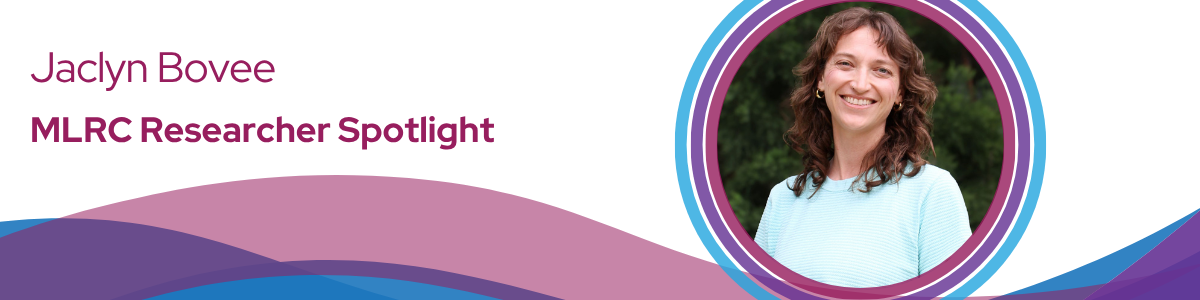
Jaclyn Bovee studies that process and its implications for multilingual learners. Jaclyn Bovee is a PhD candidate in Language, Equity, and Educational Policy at Oregon State University whose research examines how educational policies shape multilingual learners’ access, inclusion, and belonging, while critically exploring how these ideas are understood by different individuals and communities.
We asked Jaclyn to share more about her research, what inspires her work, and the impact she hopes it will have.
What experiences or questions first drew you to this area of research?
During my six years working as a public high school English Language Development teacher, I was not just an instructor of multilingual students in room D-15; I also worked as an advocate for these youth throughout the hallways of our school and across the district. I saw how policies at different levels of the school system intentionally and unintentionally impacted my students, who were bureaucratically classified as English Learners (EL-classified students). With every announcement of a policy shift, I immediately wondered how the change would affect EL-classified students. I imagined what the world might look like through the eyes of each of my students. Would this make school feel more welcoming for the most marginalized youth? Would it give them more reasons to keep showing up, despite the structural barriers pushing them out? Would it help inspire a lifelong love of learning I hoped to foster in each of them? Would it empower them not only as students in school, but as people navigating the world? These are the questions that inspire my research agenda.
If someone outside your field asked what you study and why it matters, what would you tell them?
I study educational policies that impact multilingual and immigrant youth. These students demonstrate incredible strength and resiliency as they navigate an English-dominant school system, and we can all learn from their unique perspectives and skills. Our communities and our world are better when we embrace multilingual and multicultural diversity. However, these students also continue to face structural injustices in the U.S. public school system, which can have significant negative impacts on individuals and communities, including inequitable opportunities to graduate from high school. We need to learn about how educational policies can be developed, interpreted, and implemented in ways that transform the system and create more equitable and empowering opportunities for all students.
What impact do you hope your work will have for multilingual learners, educators, or researchers?
I hope this research can make a difference for students impacted by policy development and implementation. I hope the findings from this project help policymakers work towards an education system that is more responsive to, and equitable for, EL-classified multilingual learners. I encourage researchers, policy developers, and educators across the education system to imagine new possibilities for educational language policies, inspired by innovative laws like Oregon’s Access to Linguistic Inclusion (HB 2056). I also hope we thoughtfully consider the complexity of implementation as we work to deconstruct the structures that keep us perpetuating injustice.
What’s a question you keep coming back to in your work, and why?
One question I keep circling back to in my work, and which is explored in Labaree’s (1997) paper “Public Goods, Private Goods: The American Struggle over Educational Goals,” is: What is the purpose of education? I often think about the many ways we can answer this question and how those answers can lead to very different ideas about the educational policies and practices we should pursue.
Want to hear more?
Join us November 5, 2026, at 1 PM US Central Time as Jaclyn shares how her research is helping shape more equitable educational policies and what it means for educators and researchers. Register here.