With fewer than 20% of multilingual learners (MLs) enrolled in bilingual programs across the US, the vast majority of these students spend their days in classrooms where English is the predominant language of instruction. This reality makes collaboration between English as a Second Language (ESL) specialists and content teachers crucial for student equity and success. Effective interdisciplinary co-planning helps bridge the gap between academic content and English language development, ensuring that MLs receive the tailored support they need. However, this collaboration is complex, requiring teachers to merge their pedagogical language knowledge with pedagogical content knowledge, identify language-content connections, and design appropriate instructional scaffolds. Furthermore, successful co-planning hinges on the resources of a school to ultimately support and develop strong collegiality, shared decision-making, respect, and trust.
The Challenge of Learning on the Job
Despite the necessity of these skills, most ESL teachers are not explicitly trained in professional collaboration practices during their preparation programs, leaving them to learn the intricate dynamics of co-planning on the job. Navigating the logistics of lesson adaptations, managing interpersonal dynamics, and overcoming status differentials can evoke a wide range of emotions, from pride to anxiety and isolation. Without structured support and protected time, developing these collaborative skills in real-world environments can be daunting and inefficient.
Formative Assessment for Teacher Learning
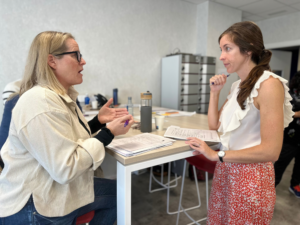 To effectively build collaborative capacity, educators need opportunities for continuous, job-embedded growth rather than isolated, sit-and-get professional development workshops. Formative assessment, specifically through structured observation tools, provides a powerful mechanism to support teacher learning of the complex adaptive skills needed for effective collaboration. Formative observational feedback from experienced coaches can facilitate teachers’ reflection on the specific areas for growth they see in themselves—such as setting clear language learning goals or identifying the connections between language and subject matter. Once identified, teachers can learn from that feedback, develop strategies for improvement, and practice those new strategies in their ongoing practice.
Simulations as a Safe Practice Environment
Because co-planning involves deep relational dynamics, practicing with real colleagues carries the risk of relational harm or professional friction. Mixed-reality simulations offer an innovative solution by providing a safe, low-stakes environment for deliberate rehearsal. In these simulations, teachers interact with digital avatars via Zoom that are operated by trained human interactors in real-time, creating a highly responsive and authentic scenario.
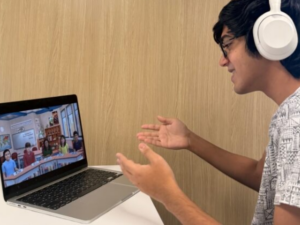 In a recent MLRC mixed-methods case study, we investigated how 13 mid-career language specialist (EAL/ESL) teachers used these simulations to rehearse co-planning. The educators engaged in 15-minute co-planning rehearsals with a fourth-grade math teacher avatar, using student exit tickets and language proficiency data to collaboratively plan scaffolds for an upcoming lesson on equivalent fractions. Following the rehearsals, participants engaged in structured self-reflection and received individualized coach feedback focused purely on their self-identified areas for improvement.
The results highlight the power of this approach: both the teachers and the coaches reported noticeable improvements in co-planning skills across all nine categories of the formative observation tool between the first and second rehearsals. The simulation also proved to be emotionally supportive; while teachers felt slight anxiety during their initial interaction, their anxiety decreased and feelings of pride and joy increased as they became more comfortable with the simulation space.
Collaborating about Collaboration!
Building on these promising findings, we invite you to contribute to the next phase of this critical work by participating in an upcoming simulation study. You are eligible to participate if you are a preservice teacher preparing to be a language specialist (such as being in an ESL or bilingual program) or a practicing K-12 teacher with language specialist responsibilities. To join click here or if you have additional questions, please contact jenelson24@wisc.edu.
If you want to keep thinking and learning about collaboration that can transform learning for multilingual students, we would love for you to join the MLRC School Network Collaboration Community of Practice. Your school does need to be a member of the MLRC to join, but we are happy to help you learn about membership too. Click here to learn more about MLRC membership and here to join the Collaboration Community of Practice.